I first heard of the suffragettes when I was very little, from the movie Mary Poppins. At the time, I had no idea how violent the protest actually was, but I remember the imagery of a woman being carried of to prison striking me as an odd thing for Mrs. Banks to seem so happy about.
As we saw in the documentary, the Suffragettes were originally peaceful, but resorted to more violent means when ignored, such as breaking windows, and, more drastically, arson and bombing buildings of politicians.
As we saw in the video, imprisoned women on hunger strikes were force-fed, so as not to help their cause by creating pity when they died. However, we did not see the solution to this problem, which, while slightly conniving, was a very effective strategy against the protesters.
When the imprisoned Suffragettes went on hunger strike, the government did not attempt to feed them. Instead, they held them until they were very weak, when they would release them. If the women died after being released, it wasn't at the hands of the government, and if they survived, they were very weakened and unable to put up a large protest for a while. when they fully recovered and protested again, they would be returned to jail, and be weakened once more. While a little brutal, this method was very effective.
When the Great War started, the leaders of the Suffragettes asked the women to turn their attention to war efforts, because their country needed them. After the war, women were rewarded with some voting rights, because their leaders knew that all the women made obsolete byt he end of the war and thus their work would be more likely to join the Suffragettes, and the problem would spiral out of control. So, voting rights were given to women over thirty, with numerous other constrictions, to pacify the feminists. While it took a very long time, eventually the Suffragettes got what they asked for.
Showing posts with label great war research. Show all posts
Showing posts with label great war research. Show all posts
Saturday, January 23, 2010

Suffragettes
Originally named from a Daily Mail newspaper, the Suffragettes were a militant group that stood for Women's rights and their suffrage in the United Kingdom. Although the name was meant to be a labeling of negative content, the name stuck and meant something positive for women around. Their efforts came from the lack of rights that were given to them, such as voting. Men around that time thought that the women's brain was too small to make such important decisions. Not only was it the common man on the streets but even scholars made arrogant remarks to women's livelihood.
The reason I picked this topic out of the ones that we looked at in class, was because it was something that was going on before World War 1. This topic might be overlooked constantly because in some eyes it may not seem as important. It was something different from the others thus raising my interest of the historic women's suffrage.
Friday, January 22, 2010
Kaiser Willhelm
After watching the video, I was interested in the early life of Kaiser Wilhelm's. I researched his early life to see why he might have been such a big part of starting World War I. As we learned in the video, Wilhelm was born with a damaged left arm. I think this was a large part of his behavior later in his life toward the great war. He was also brought up with a military like discipline. Wilhelm's mother, the daughter of queen Victoria, had an even bigger effect on him though. She instilled many disciplinary values into him. Although the relationship between them was bitter, she influenced him a lot for his future. He ruled with the same liberal values that his mother taught him.
Big 5 Alliances

What I found interesting in the video was how five nations, Germany, Russia, Britain, Austria-Hungary and France, all came to be known as the "Big Five" or the "Central Powers" I was curious how this happened and what it took for these countries to get this title. I was also interested in the different alliances these countries formed with others.
Watching the movie, it was obvious that the reason these countries got so much recognition and why they were so feared was simply because, as the name Central Powers implies, their wealth, economy and population was so large and also very stable before the war started that they were the most powerful. During the war, this meant that they were able to have a bigger, more powerful army. As Freddie's chart shows, these were the countries who had the most casualties, but also the most people in the war. They had large armies and unfortunately this meant more casualties, but not necessarily less power.
As for alliances, we learned in class today that Germany was aligned with Austria-Hungary, partly because they shared a border and the same language, but mostly because all the other countries in Europe rejected Germany because Germany was so power-hungry and violent. Because the "rule of alliances" is to form alliances with three, Germany and Austria-Hungary both sided with Italy, who was not very powerful or of major importance in the Great War, but made it so Germany, Austria-Hungary and Italy could form the Triple Alliance.
England, France and Russia all banded together against the Triple Alliance as the Triple Entente. Although England and France had a history of disagreement, during this time period they were relatively on the same page. They both shared an Industrial Revolution, they liked to colonize, and they were also close to each other in geography. They sided with Russia because they all shared ideas in the Enlightenment and had gotten along relatively well. Also, all three nations agreed that Germany was too power-hungry and out of control to side with.
Based on this, we can see that alliances that formed shortly before the Great War were based off of geography and past-shared experiences. Once the Great War started, the fragile alliances were subject to change.
Thursday, January 21, 2010
The Epsom Derby
The video we watched mentioned the Emily Davison and her death at the Epsom Derby. I thought this was an interesting bit of information, so I decided to look into it more. Emily Davidson was a very active and one of the more violent members of the Suffragettes. She'd had several arrests within the few years leading up to her death. This particular public statement was not meant to be a suicide mission. She'd been planning on raising the Suffragette flag on the King's horse so it would finish the race with the Suffragette colors. About a year or so before this happened she did try to commit suicide, but most people believe that this was not an attempt to kill herself because she'd had a train ticket and tickets for a Suffragette event later that day. Her actions not only killed her, but also permanantly injured the jockey that was riding the horse. Many people speculate that the jockey's suicide 40 years later was somehow caused by Emily Davidson's death. Davidson's death was highly publicized and used as a tool for the Suffragette's cause.
Great Britain's Navy's Influence
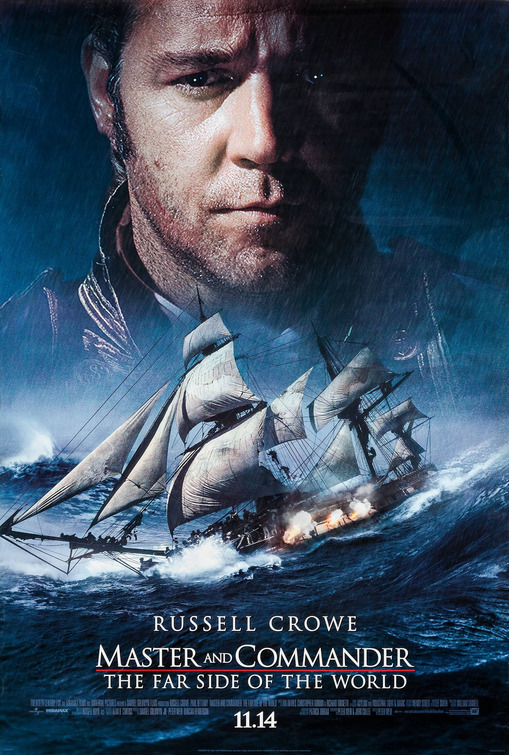
(picture from the movie "Master and Commander")
- Britain's lack of naval supremacy exposed b/c of imperialism, France and Russia involved
- Fighting over colonies in the Mediterranean between Britain, France and Russia (France and Russia = allies, worries Britain)
- French more innovative in naval guns technology, more important than #s
- Public support/propaganda for strengthening Britain's naval program leads to passing of Naval Defense Act in 1889
- Britain bolsters naval program, once again becomes world's most powerful navy
- Unwittingly causes endless naval race between Britain, France and Russia, which sours relations and helps cause WWI
I learned from Gale (search "Great Britain's navy" on a basic search on Gale's World Resource Center if the link doesn't work) that Britain's legendary navy wasn't as powerful as I thought they were. France was in serious competition with Britain for naval supremacy, and Britain's edge in number of ships was rendered useless by France's more advanced war ships.
Great Britain's lack of naval supremacy was exposed by the wave of imperialism that struck Europe. GB, France and Russia all wanted to colonize areas in the Mediterranean and Britain's lack of success not only made obvious their naval weakness, but unofficially made France and Russia allies. This was troublesome for GB because France was their greatest competitor.
Britain realized their fall from naval power, and drawing heavily on the propaganda of major naval figures and the general public's support, the British government passed the Naval Defense Act of 1889. This program once again made GB the world's naval superpower, but at what cost (besides fiscal, of course)? They unwittingly set into motion a never ending race between France, Russia and themselves for naval supremacy that no country could win. Britain's initial naval program also soured relations between the countries and each country's individual programs led to the Great War.
Wilfred Owen
After watching the documentary today in class, I decided to do research on who Wilfred Owen was. He was briefly mentioned in the beginning of the documentary and he was portrayed as an important figure which left me curious as to why he was recognized.What I found was interesting. Most importantly I found that he was a famous war poet who was known for the solemn tone in his poetry. He joined the army at a young age and experienced two traumatizing events. In an explosion he was blown high in the air and landed in the guts of his fellow officers, the second traumatizing experience was being trapped in a German dugout for 8 straight days. After the explosion incident, he was sent to a hospital were he befriended a poet by the name of Siegfied Sassoon who inspired him to write poetry. After a quick stint as a teacher, he reenlisted in the army and led many successful assaults. During his second time in the army he wrote most of his famous poetry. Unfortunately he died in the last week of World War 1.
"The Great War:" Casualties
According to the documentary "The Great War," 9 million people were killed in total during the war. After researching this statistic even further, I discovered which countries suffered the most casualties and which lost minimal amounts. Casualty statistics are shown on the table at the bottom.
I chose to research this simple piece of information because it reveals which countries were mot involved in the the war - the key players. Evidently, the key players in The Great War were Russia, England, France, Germany, and Austria-Hungary. The countries who invest the most soldiers in a war are generally the powers who are most involved. Therefore, this statistic enhances our understanding of the main powers during WWI.
| Country | Total Mobilized Forces | Killed | Wounded | Prisoners and Missing | Total Casualties | Casualties as % of Forces |
| ALLIED AND ASSOCIATED POWERS | ||||||
| Russia | 12,000,000 | 1,700,000 | 4,950,000 | 2,500,000 | 9,150,000 | 76.3 |
| British Empire | 8,904,467 | 908,371 | 2,090,212 | 191,652 | 3,190,235 | 35.8 |
| France | 8,410,000 | 1,357,800 | 4,266,000 | 537,000 | 6,160,800 | 73.3 |
| Italy | 5,615,000 | 650,000 | 947,000 | 600,000 | 2,197,000 | 39.1 |
| United States | 4,355,000 | 116,516 | 204,002 | 4,500 | 323,018 | 7.1 |
| Japan | 800,000 | 300 | 907 | 3 | 1,210 | 0.2 |
| Romania | 750,000 | 335,706 | 120,000 | 80,000 | 535,706 | 71.4 |
| Serbia | 707,343 | 45,000 | 133,148 | 152,958 | 331,106 | 46.8 |
| Belgium | 267,000 | 13,716 | 44,686 | 34,659 | 93,061 | 34.9 |
| Greece | 230,000 | 5,000 | 21,000 | 1,000 | 27,000 | 11.7 |
| Portugal | 100,000 | 7,222 | 13,751 | 12,318 | 33,291 | 33.3 |
| Montenegro | 50,000 | 3,000 | 10,000 | 7,000 | 20,000 | 40.0 |
| TOTAL | 42,188,810 | 5,142,631 | 12,800,706 | 4,121,090 | 22,062,427 | 52.3 |
| ALLIED AND ASSOCIATED POWERS | ||||||
| Germany | 11,000,000 | 1,773,700 | 4,216,058 | 1,152,800 | 7,142,558 | 64.9 |
| Austria-Hungary | 7,800,000 | 1,200,000 | 3,620,000 | 2,200,000 | 7,020,000 | 90.0 |
| Turkey | 2,850,000 | 325,000 | 400,000 | 250,000 | 975,000 | 34.2 |
| Bulgaria | 1,200,000 | 87,500 | 152,390 | 27,029 | 266,919 | 22.2 |
| TOTAL | 22,850,000 | 3,386,200 | 8,388,448 | 3,629,829 | 15,404,477 | 67.4 |
| GRAND TOTAL | 65,038,810 | 8,528,831 | 21,189,154 | 7,750,919 | 37,466,904 | 57.5 |
Wilfred Owen
The beginning of the documentary featured a brief discussion and a quotation from Wilfred Owen. The reason Wilfred Owen was mentioned in the documentary is because he was a famous poet during World War I. He wrote many poems about the war and war itself. He wrote his poetry from his experiences in battle. He served in the army for many years and had many significant experiences to write about. After an injury after his first time serving in the army, he met a man named Siegfield Sassoon, who ended up inspiring his poetry. Upon his recovery, he went back into the army and during his time serving, he wrote many noteworthy poems. He was a hero because of his performance in battle as well as his elegant writing that he left behind.
Kaiser Wilhelm's Childhood
I was really interested in Kaiser Wilhelm's life as a child because it seemed like he had his share of hardships, and you have to wonder how much of an effect these events affected his mind as the leader of a country.
From birth Kaiser Wilhelm was forced to live with a debilitated left arm in a time when physical appearance was extremely important. His mother would never hesitate in expressing her disappointment with her son's unnatural arm. Because he felt like his mother despised him, they grew separate. As we saw in the video, his strict tutor forced him to continue to learn to ride horseback for himself, even as he saw him fall off every time. Eventually, his mother's dominance over his father caused Wilhelm to reject bother of them and remain distant once he left for college. There, he was much happier. "I found my family, friends, interests - everything in my life that I had been deprived of." This illustrates Wilhelm's satisfaction with his adult life but also the bitterness he felt towards his childhood. His days at his grandmother's representation of a battlefield led into his desire to join the army as a young man, in spite of (or possibly because of) his left arm. However, he was described as rude, unstable, insensitive, and self-centered, determined to have his own way. In addition, many noted his belligerence and violent attitude.
Looking at his childhood, many trends can be found, and his tendencies carried over into his political life. His political actions were often viewed as extremely shallow and his policies just as inconsistent. Wilhelm's playing "war," his time in the army, and his naturally violent disposition shone through in his leadership. He wanted to build a navy to rival that of the British, and he antagonized neighboring powers with his bellicose decisions. Wilhelm constantly felt unappreciated as a child, so he needed to assert himself, and he was forced to learn the hard way, through trial and error. This proved to foster a somewhat incompetent leader whose militaristic decisions may have set the country back.
Understanding Otto and the German Empire
During the documentary we heard a small section on former leaders who had influenced Germany, none of whom I had heard of; I realized that I don't really know a whole lot about German history in general. So, for tonight's research, I looked into German history through Otto von Bismarck.
Otto von Bismarck was born in 1815 and died in 1898. In his early career, he was sent as an ambassador to France where he worked for some eleven years. Through the Parisian lifestyle he gained new ideas on government, changing him from a conservative member of the elite to a slightly more liberal nobleman who acknowledged the importance and usefulness of a burgeoning middle class. In 1862, Bismarck was called back to Prussia where he was named Prime Minister by the conservative King William I. The king acted desperately, for he needed support in the expansion of the military to which the parliamentary houses were strongly opposed. Bismarck assisted his King in this case, later saying that "blood and iron" would resolve Prussia's future disputes. As it was, this was more of a liberal statement, showing that Bismarck intended the army for national unification and battle against an enemy, as opposed to the suppression of the German people. Nonetheless, Parliament officially rejected Otto in 1863, voting not to deal any longer with the chosen prime minister. Little did they know that his decisions in the next ten years would mark him as a national hero.
When trouble brewed in the duchies of Schleswig and Holstein between the Danes and the Germans, Bismarck allied Prussia with Austria in a war with Denmark. The pair won in 1865 and split the winnings - Prussia took Schleswig and Austria took Holstein. Otto then turned on his allies in 1866, marching the Prussian army on Austria. Within six weeks the Austrians were reduced to a secondary power within Germany. Prussia now had dominance. In the treaty to end continued conflict, Prussia annexed all cities that had participated in the effort to stop the Prussian troops.
These two wars had brought the separate states of Germany closer together, nationalism rising somewhat when the country was given a common goal. Bismarck attempted to use this advantage to bring all of Germany together under a single emperor and parliament. His endeavors to bring about unification failed, however, and he was left to think of how to further bring together the German people. A third war was in order. When, in 1869, the Spanish throne was offered to the king's cousin, he was given an opportunity to create one. Napoleon III took the Spanish offer badly, as an attempt to surround France and decrease its power. He sent an ambassador to kindly request that the king's cousin refuse the offer, an appeal that the latter agreed too. When the ambassador was sent a second time, asking that such an offer never be accepted in future, the king's cousin was not so cooperative. Bismarck took his chance, obtaining an account of the exchange and altering it slightly such that both Germany and France could take offense. The conversation was then made public. Furious at Germany's impudence, France declared war in 1870. A year later, the German Empire (including only as many states as could be allowed while maintaining an authoritarian government) was created. France was defeated and the new empire annexed the French provinces of Lorraine and Alsace, both of which were home to a considerable number of German speakers. Bismarck had achieved his prize of German unification, along with the added benefits of being the prime minister of Prussia and the first chancellor of the German empire.
The documentary stated that Otto von Bismark was the creator of a 20-year-long peace in Germany. Evidently, this referred only to the years following the creation of the German Empire by his hands.
Otto von Bismarck was born in 1815 and died in 1898. In his early career, he was sent as an ambassador to France where he worked for some eleven years. Through the Parisian lifestyle he gained new ideas on government, changing him from a conservative member of the elite to a slightly more liberal nobleman who acknowledged the importance and usefulness of a burgeoning middle class. In 1862, Bismarck was called back to Prussia where he was named Prime Minister by the conservative King William I. The king acted desperately, for he needed support in the expansion of the military to which the parliamentary houses were strongly opposed. Bismarck assisted his King in this case, later saying that "blood and iron" would resolve Prussia's future disputes. As it was, this was more of a liberal statement, showing that Bismarck intended the army for national unification and battle against an enemy, as opposed to the suppression of the German people. Nonetheless, Parliament officially rejected Otto in 1863, voting not to deal any longer with the chosen prime minister. Little did they know that his decisions in the next ten years would mark him as a national hero.
When trouble brewed in the duchies of Schleswig and Holstein between the Danes and the Germans, Bismarck allied Prussia with Austria in a war with Denmark. The pair won in 1865 and split the winnings - Prussia took Schleswig and Austria took Holstein. Otto then turned on his allies in 1866, marching the Prussian army on Austria. Within six weeks the Austrians were reduced to a secondary power within Germany. Prussia now had dominance. In the treaty to end continued conflict, Prussia annexed all cities that had participated in the effort to stop the Prussian troops.
These two wars had brought the separate states of Germany closer together, nationalism rising somewhat when the country was given a common goal. Bismarck attempted to use this advantage to bring all of Germany together under a single emperor and parliament. His endeavors to bring about unification failed, however, and he was left to think of how to further bring together the German people. A third war was in order. When, in 1869, the Spanish throne was offered to the king's cousin, he was given an opportunity to create one. Napoleon III took the Spanish offer badly, as an attempt to surround France and decrease its power. He sent an ambassador to kindly request that the king's cousin refuse the offer, an appeal that the latter agreed too. When the ambassador was sent a second time, asking that such an offer never be accepted in future, the king's cousin was not so cooperative. Bismarck took his chance, obtaining an account of the exchange and altering it slightly such that both Germany and France could take offense. The conversation was then made public. Furious at Germany's impudence, France declared war in 1870. A year later, the German Empire (including only as many states as could be allowed while maintaining an authoritarian government) was created. France was defeated and the new empire annexed the French provinces of Lorraine and Alsace, both of which were home to a considerable number of German speakers. Bismarck had achieved his prize of German unification, along with the added benefits of being the prime minister of Prussia and the first chancellor of the German empire.
The documentary stated that Otto von Bismark was the creator of a 20-year-long peace in Germany. Evidently, this referred only to the years following the creation of the German Empire by his hands.
World War One Technology
I became interested in technology during the first world war because of the huge effects it had on society. I wanted to investigate further into the new inventions of the time to understand more fully:
1. Why world war 1 was a time of such great technological improvements and
2. What were some of these changes and why were they so important?
Suffragettes
I chose to research suffragettes because they believed in the equality of the common person. It is only appropriate that I write about people wanting equality during the week of remembering Martin Luther King. The suffragettes wanted equal rights and to be able to do the basic things that all men could do politically, such as vote. They were thought to not have the brain capacity to vote and would make bad decisions that will affect the country in a negative way. "Suffrage" means the right to vote, which is what women wanted. They first believed in peaceful protest and felt that any violence would persuade men that women couldn't be trusted to have the common rights. Millicent Fawcett, the woman who founded the National Union of Women's Suffrage, argued for the rights of women. She planned to have patient and logical arguments saying that women could hold responsible posts in society such as teaching children the proper education, but couldn't be trusted to vote. Since women had to pay taxes just like men, they should have the same rights as men. One of her most powerful arguments was that wealthy mistresses of large manors employed gardeners, workmen, and labourers who could vote, but the women who did the employing could not. Regardless of their wealth, they still couldn't vote. Her process was very slow and most men in the Parliament believed that women would not understand how the Parliament worked, so they should not take part in the elections. The suffragettes started very peacefully, but in 1905 two women interrupted a political meeting to ask two politicians if they believed women should have the right to vote. Both politicians didn't reply and both women were thrown out fo the meeting and arrested. They were arrested for causing an obstructon and a technical assault on a police officer. Some women were eventually thrown into jail for burning down churches and for breaking all the windows on a street. Suffragettes refused to eat when they were thrown in prison and went on a hunger strike. The government didn't want the women to die in prison the government would be responsible for their deaths. The prison governors force fed Suffragettes, which caused even more contreversy. The government decided to use the Cat and Mouse Act, where they would let the women go on a hunger strike and when they were extremely weak, they would release them from prison. If they died from hunger out of prison, the government would not be blamed for it and if they survived, they were too weak to protest. If some of them started eating again, then the officials would arrest them again using the most trivial of reason and the whole process would start over again. This process was a very simple but effective weapon against the Suffragettes because they would slowly wear out the Suffragettes. The result was the Suffragettes becoming more extreme. The most memorable act was when a woman threw herself in front of the King's horse during a race. She was killed and the Suffragettes had their first martyr. But when Britain and Europe started World War One, the Suffragettes stopped the violence and supported the government and its war effort. Four years after the World War started, 1918, the Parliament passed the Representation of the People Act, which let women vote. They decided to let them vote because the work done by women in the war was vital for the Britain's war effort. Because of the World War, the women received their right to vote in Britain.
Subscribe to:
Posts (Atom)